
Rabby Wallet: Why Transaction Simulation Changes How DeFi Power Users Trade
Whoa!
Rabby wallet has been on a lot of power users’ radar lately, and for good reason.
On the surface it’s a crisp, multi-chain extension that feels faster than most.
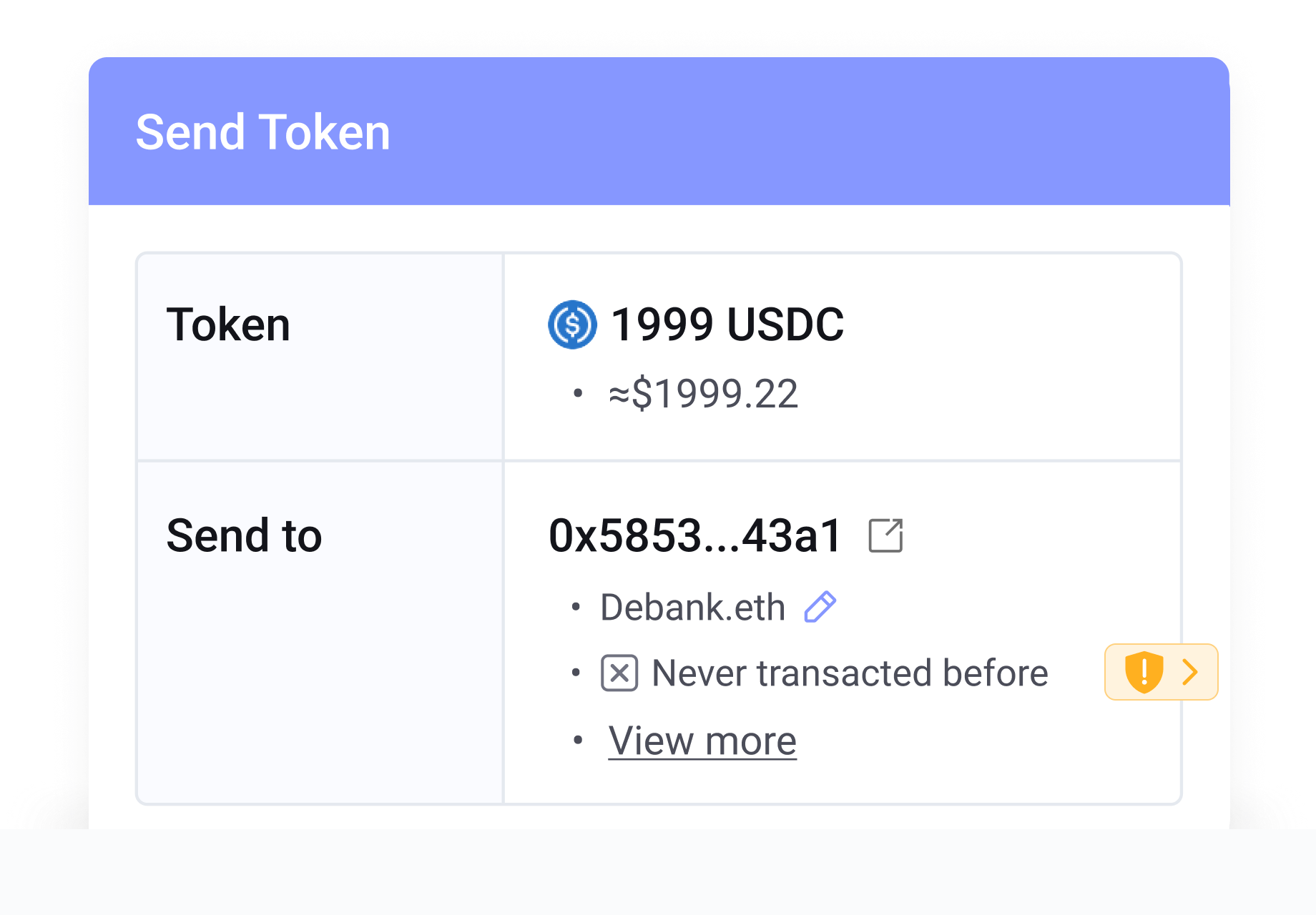
But the real differentiator is the transaction simulation layer, which previews state changes and flags risky approvals before you click confirm—so you actually see what a tx will do, not just how much gas it’ll cost.
That preview is a game-changer for people moving big positions across chains or interacting with complex contracts.
Really?
Yes, really.
Initially I thought transaction simulation was mostly marketing—another shiny UI trick.
Actually, wait—let me rephrase that: the first impressions can be deceptive, because what looks like a simple preview actually surfaces subtle failure modes and front-running risks that would otherwise be invisible.
On one hand it’s comforting; on the other hand it exposes somethin’ ugly about how many dApps obfuscate state changes.
Okay, so check this out—here’s the core idea.
Before any confirmation Rabby runs the call data locally (or via a back-end simulation) to estimate effects like token transfers, approval changes, and storage updates.
That means you can see if an approval will set an allowance to infinite, or if a swap route will move funds through a low-liquidity pool and likely slip more than you expect.
My instinct said this would be marginally helpful, but the reality is it’s actionable: you avoid a lot of tiny, expensive mistakes that add up fast.
Also it helps you debug failing txs without spamming the network.
Hmm… some quick context for the power user crowd.
Rabby is built as a browser extension with multi-chain support—Ethereum and EVM-compatible networks are front-and-center.
It focuses on security primitives that serious users care about: granular approvals, hardware wallet integration, and clearer transaction previews.
Those features are aimed at traders, liquidity providers, and contract interactors who need more than a generic popup.
And yes, it can slot into a Ledger workflow if you prefer keys that never touch your browser.
How transaction simulation actually saves you money (and headaches)
Short answer: it prevents surprises.
Medium answer: simulation catches three key classes of problems—reverts, excessive slippage, and malicious approvals.
Longer thought: by replaying the transaction against a near-real state (including pending mempool conditions when possible), the simulation reveals whether your swap will fail due to insufficient output, whether a contract call will unexpectedly transfer extra tokens, and whether an approval will permanently give allowance to a contract that shouldn’t have it—so you can edit input parameters, adjust slippage, or refuse the allowance.
This is not perfect; simulations can be limited by oracle freshness or pending mempool manipulations.
Still, having a readable diff beats guessing and then paying a retry fee.
Here’s a typical workflow I recommend for any nontrivial tx.
Prepare the transaction in your dApp or in the wallet UI.
Pause.
Simulate.
Review the balance diffs, the logs, and the exact approvals before you sign—especially if the dApp tries to set an infinite allowance.
Wow!
A brief note about approvals, since they cause the most long-term headaches.
Rabby surfaces allowance changes clearly so you can choose a specific amount instead of “infinite,” or at least be aware when infinite is requested.
Power users tend to keep an approvals dashboard and revoke unneeded allowances periodically; Rabby makes that far less painful.
Oh, and by the way, combining simulation with a periodic audit of allowances can stop many rug attempts before they begin.
On integration and downloads—some practicalities.
If you’re looking to add Rabby, get it from a trusted source to avoid spoofed builds; many users link directly to the official extension page.
You can start here: https://sites.google.com/cryptowalletextensionus.com/rabby-wallet/
Bookmark the page, verify the extension’s publisher in the store, and prefer hardware-backed accounts for large-value moves.
Power users often maintain separate accounts: one for spot trading, another as a cold vault, and a transient account for approvals and bridging.
Seriously?
Yes—segmentation reduces blast radius when something goes sideways.
On the technical side, simulation doesn’t eliminate MEV or sandwich attacks, but it can reveal routes that are likely to be targeted due to tight slippage or low liquidity.
So you might change slippage from 0.5% to 1% or choose a different router after seeing the simulated path.
That’s the pragmatic win: fewer failed txs, fewer retries, less gas wasted.
One caveat: simulation fidelity varies.
Sometimes the chain state in the simulator lags behind the mempool or misses pending reorgs.
On occasion a tx will still revert because an oracle updated between the simulation and execution.
On one hand it’s a valuable safety net; on the other, you still need fallback strategies—nonce management, gas bumping policies, and a mental model for what will cause reverts.
I can’t promise simulations are bulletproof, but they make failure modes visible in ways that were previously hidden.
Here’s what I see power users actually doing differently with Rabby.
They simulate complex interactions like multi-hop swaps or contract calls first, then sign via hardware wallets.
They check the logs for unexpected transfers and limit approvals where possible.
They also keep a watchlist of contracts that repeatedly request infinite approvals, which signals sloppy or predatory dApp behavior.
It’s not glamorous, but it’s effective.
FAQ
Is Rabby Wallet safe for high-value DeFi operations?
Short: it’s more secure than many generic wallets.
Medium: Rabby adds clarity around approvals and preflight simulation, and supports hardware wallets so you can keep private keys offline during signing.
Longer: Safety is a multi-layered thing—use segmented accounts, enable hardware signing for large transactions, and pair Rabby’s simulation with off-chain checks (e.g., contract audits or community reputation) before moving big sums.
No single tool is infallible, but Rabby’s features reduce common human errors.
How does the transaction simulation work?
It replays the transaction against a recent chain state or a simulated environment, producing a state diff that shows token transfers, approval updates, and emitted events.
This lets you inspect whether the call would revert, how balances change, and whether allowances are modified.
Remember that simulation accuracy depends on data freshness and the simulator’s modeling of on-chain oracles and mempool conditions.
Can I use Rabby with a Ledger or other hardware wallet?
Yes—Rabby is designed to interoperate with hardware devices so your signing keys never leave secure storage.
Power users typically keep a hardware-backed vault for large holdings and a browser wallet for day-to-day interactions.
If you handle large positions, never skip the hardware step; it’s simple and effective risk mitigation.

Leave a Reply